Work / Watch review
John Mayer made me appreciate the Nixon Time Teller
In defense of the fashion watch — John’s involvement is actually relative
From my watch blog, Gold & Green: the first review I wrote, for a watch the enthusiasts love to skip.
On the wrists where you’d normally find an Apple watch or retro Casio, there once resided a watch that I believe still deserves the relevance it holds today: the Nixon Time Teller.
Fashion what?
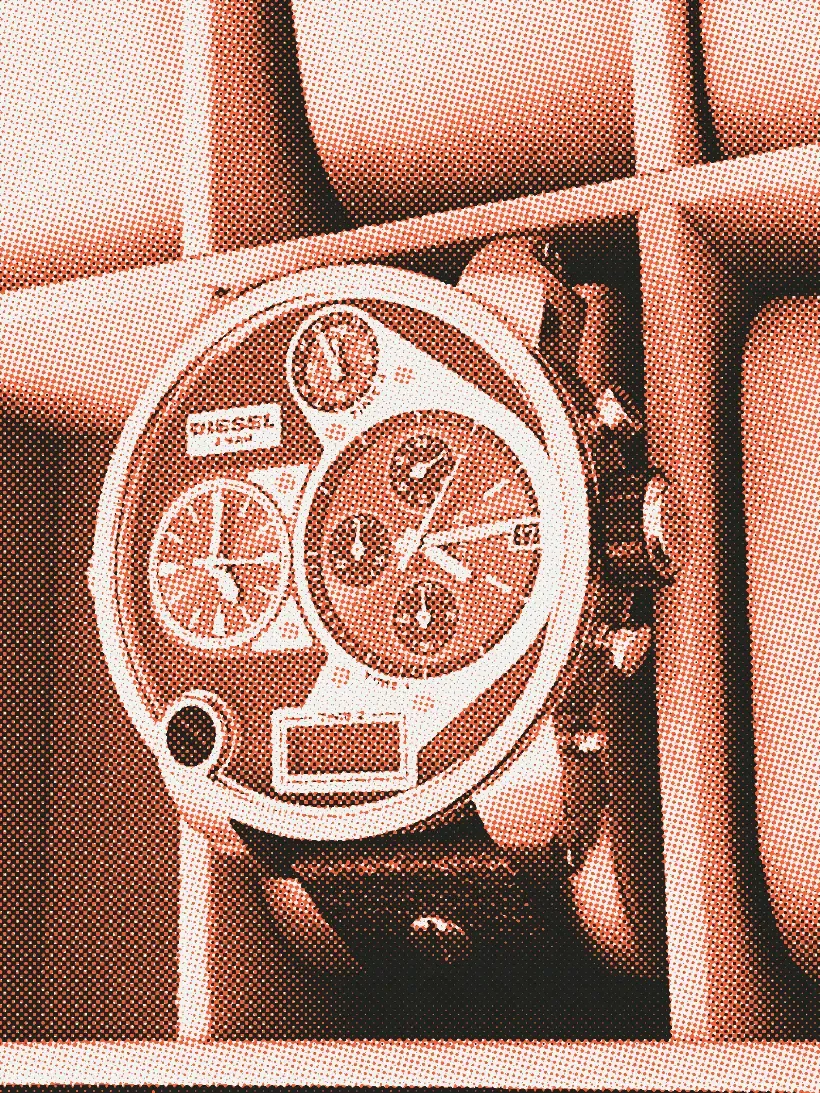
“Fashion watch” as a catch-all term manages to encompass everything that timepiece enthusiasts online seek to avoid: generic designs, no-name movements, poor finishing, superlative case dimensions and generous markups. From clothing brands like Diesel (all the charges held against the Fossil group, really) to Daniel Wellington and MVMT, the market offers plenty for us nerds to avoid.
Taking a step back from the watch community, such brands have become the relic of an antiquated purchasing experience: fashion watch often equals department stores, whose decrease in foot traffic only accelerated after a certain global pandemic.
Against all odds: the Nixon brand
Nixon markets themselves as a brand geared towards action sports enthusiasts. While the watches admittedly do not play in the same league, I find this affiliation akin to that of other brands that work hard to be associated with motorsports or the Olympics; they’re only targeting individuals with a different net worth. In recent years, we have also seen watch brands like Vaer banking on California-cool board culture — so that was more than a fad.
Almost as important as having a reliable piece of equipment, is telling the world that they surf, skate or snowboard. These products are an item of personal expression.
Andy Laats, Nixon founder
Nixon’s brand vision was to become the wrist equivalent of a Monster Energy hat
Founded in 1998, Nixon has been producing watches for nearly three decades: 20 times the lifespan of the microbrand you backed on Kickstarter in 2017, or the blink of an eye for the Swiss watchmaking industry. They have mostly remained independent for that period of time; although uninterestingly enough, they were once owned by action sports/fashion specialist Billabong.
Nixon sits in a rare, though not particularly desirable spot in the industry — they’re old enough to have emerged before the Internet, AliExpress, micro-brands and the recent regain in interest towards mechanical timepieces; but they’re too young to be able to count on heritage to survive. Stuck between the rock of horology and the hard place of fashion, where trends go as fast as they come, Nixon managed to stay around without offering anything particularly interesting to neither. Admittedly, they did not try.
One contributing factor to the brand’s relative longevity is acute business and supply chain acumen. In my country, the distribution of Nixon was and remains excellent, and a staple of any skate or board shop worthy of its name. I remember liking the watches I saw on the transparent displays shelves — visibly provided by the brand, the same way Coca-Cola equips shops with branded refrigerators. The memory of me sticking my nose to the glass is still vivid — as vivid as that of Rolex clocks on TV during my father’s Formula 1 afternoons, or when we’d watch the Roland-Garros finals together. It certainly resonates more strongly than the memory of timekeepers worn by Steve McQueen in cult movies I have yet to watch.

The Time Teller’s design: cushion case, but make it minimal
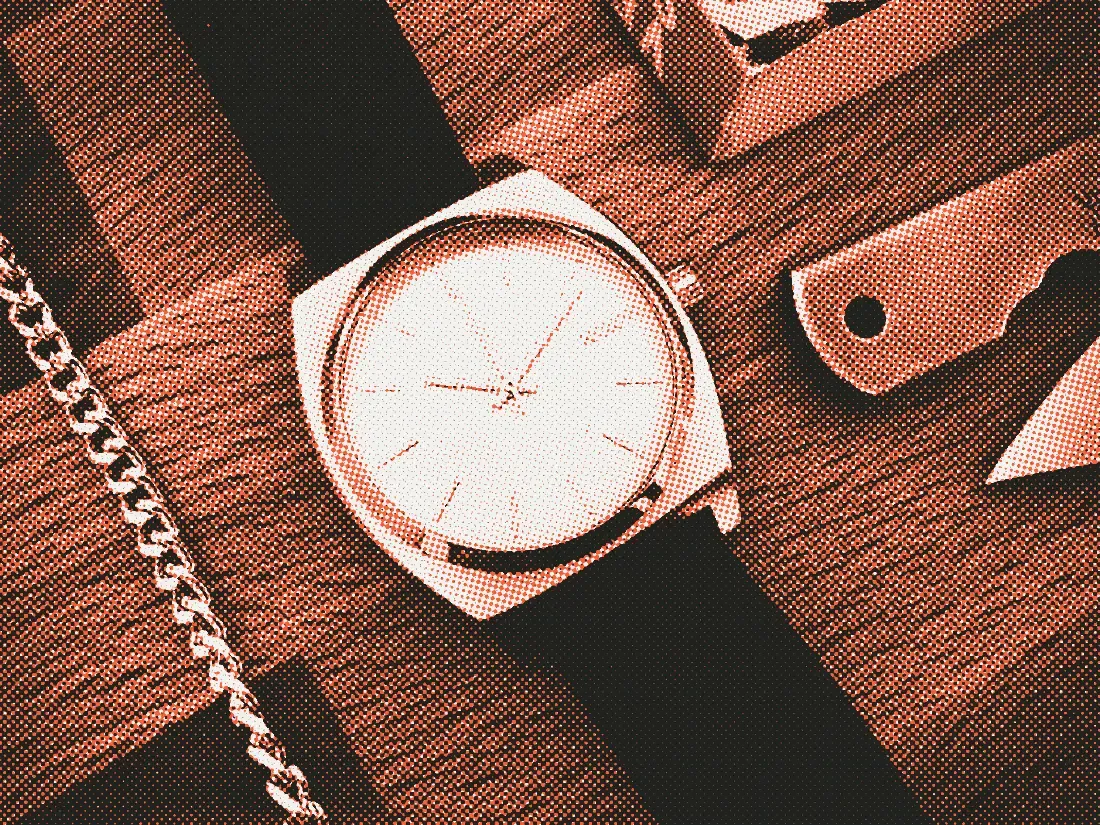
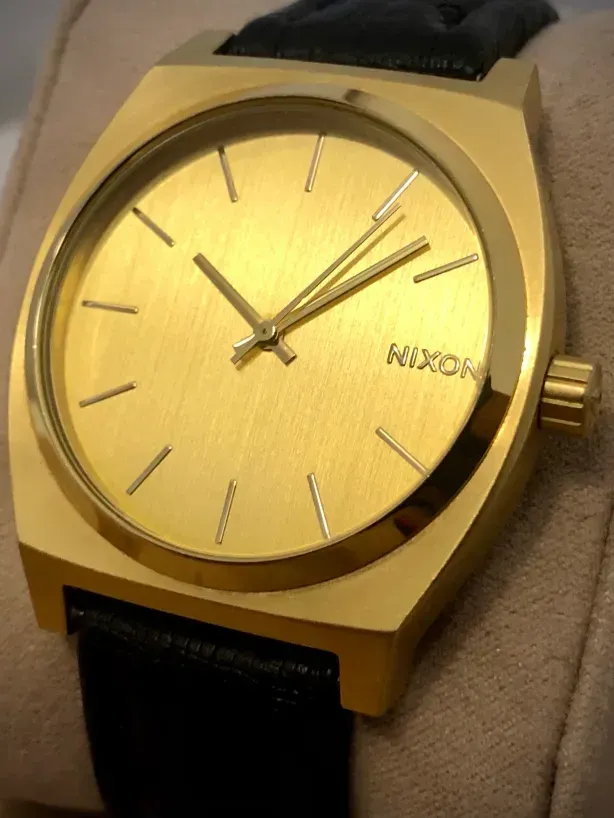
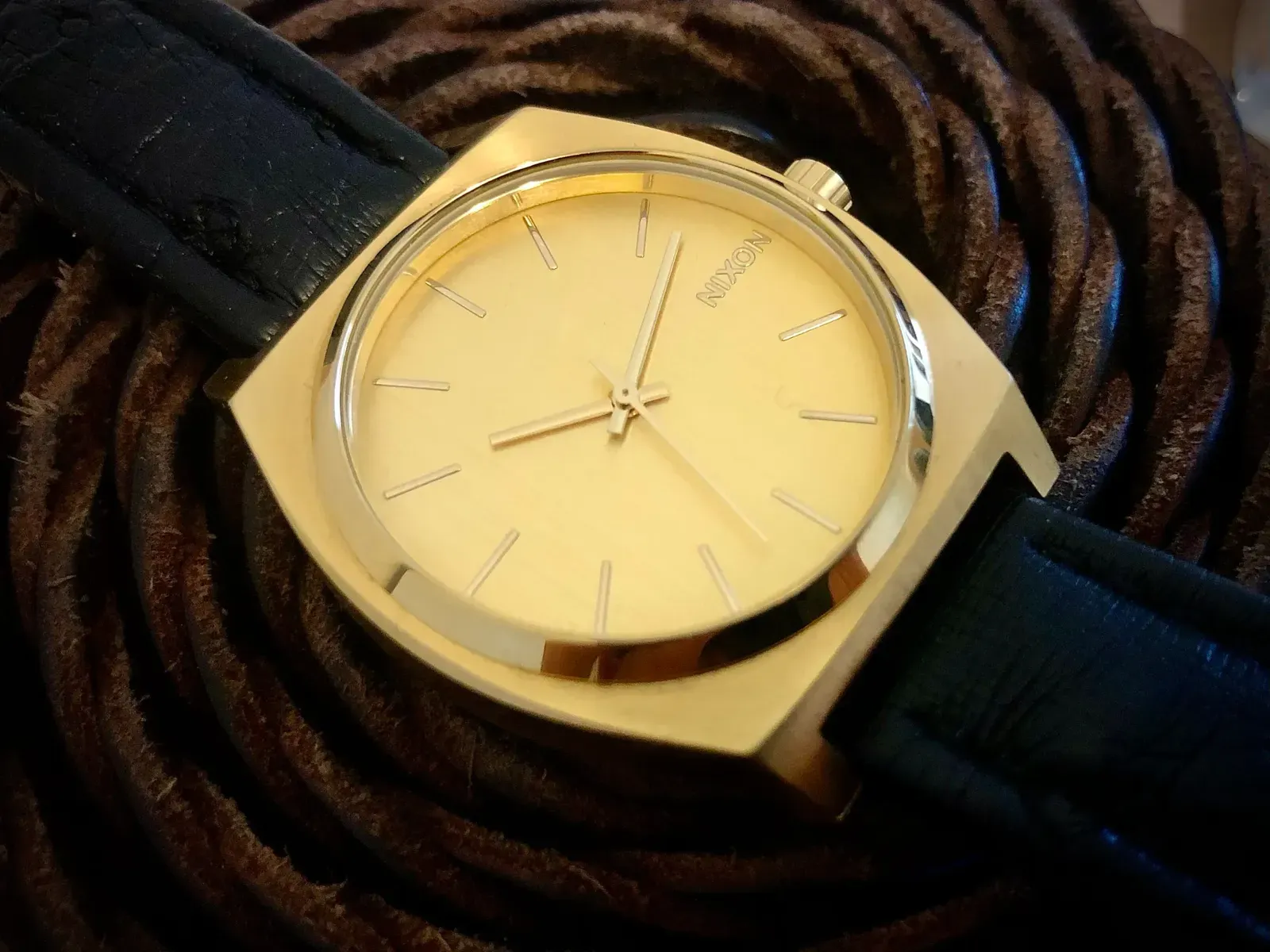
Let’s talk about the Time Teller, starting with its case dimensions. At 37 millimeters, it sports near-perfect proportions, with a solid dial-to-case-and-bezel ratio.
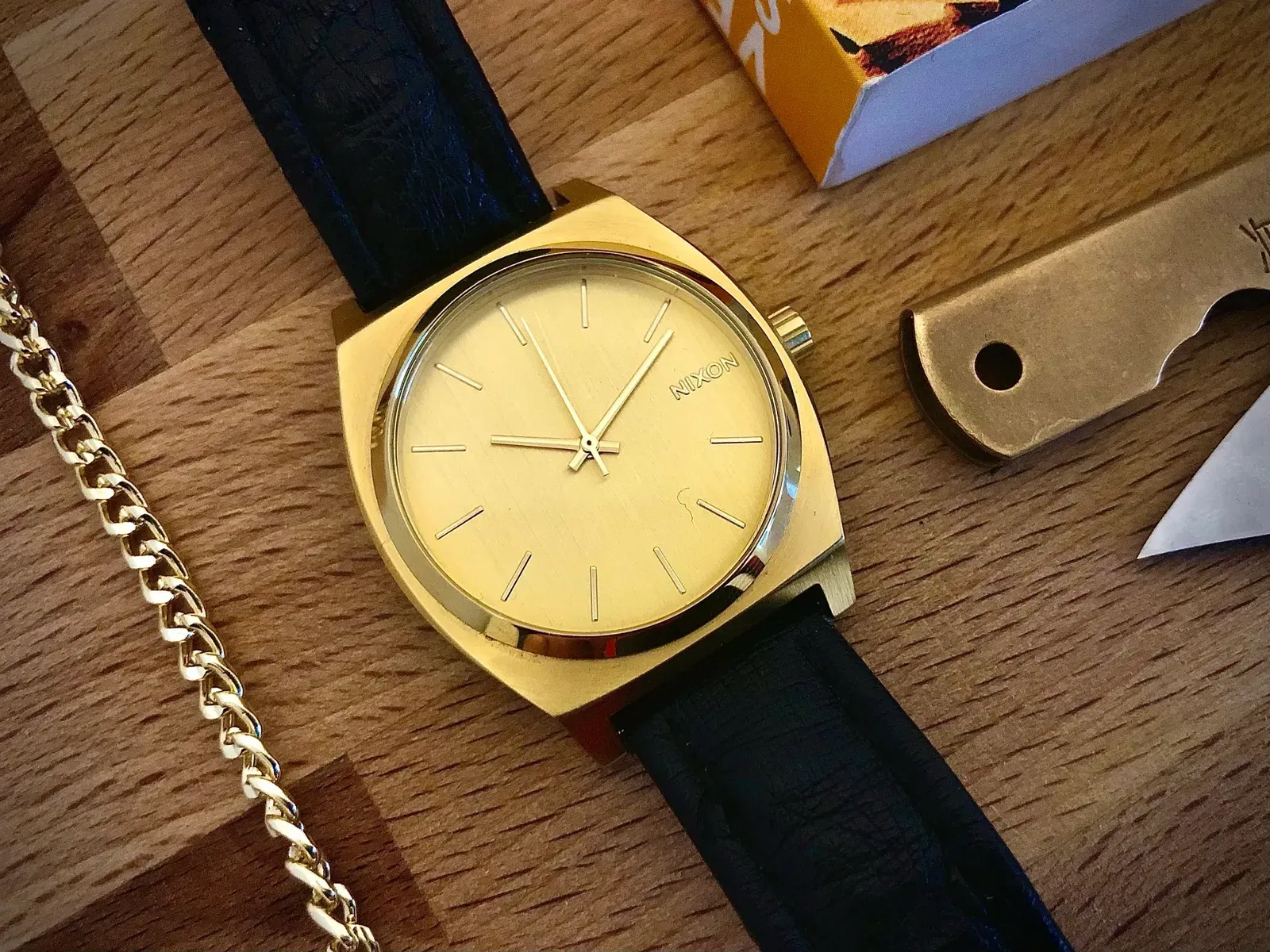
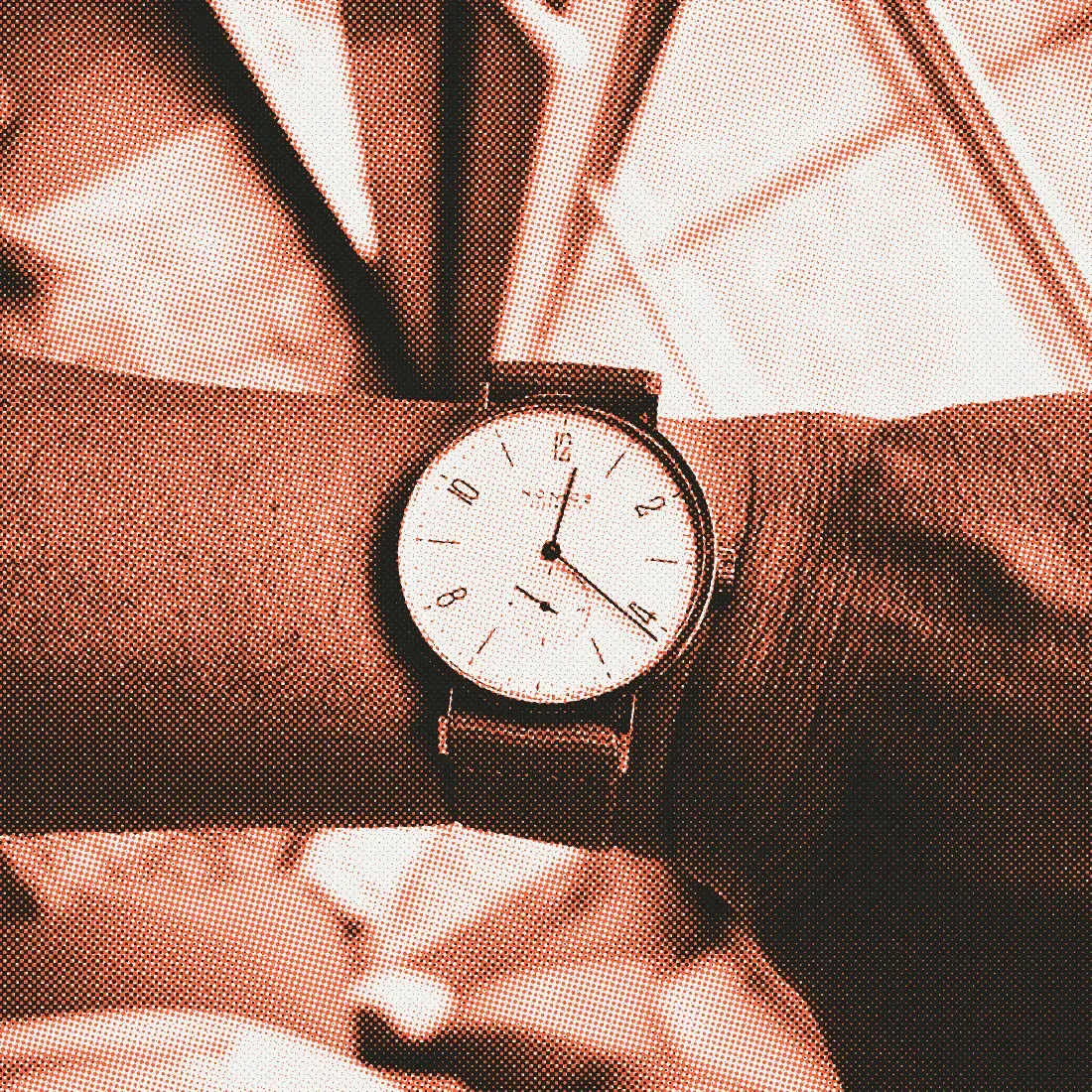
As far as minimally-designed watches go, I find it to be a bit of fresh air: bauhaus watches like the Nomos Tangente (or Daniel Wellington and Junkers, should we remain in the same tax bracket) are beautiful timepieces but they are all dial. While the execution is flawless, a larger white and somewhat flat area makes them wear larger than their restrained dimensions may suggest. It’s especially true for Nomos and the longer lugs we’ve come to associate with the German brand. Here, the case is generous, the lugs short and wide, and could almost pass as a cushion case.
The day I fell in love with watches was when I first held a C-shape Omega Constellation in hand, weighing the pros and cons of simply robbing it. As a consequence, I stay partial to designs that feature a smaller dial aperture crowned with a proportionally larger bezel, case and lugs. This balance makes the appeal of the Oystercase or, to a certain extent, dive watches. Cushion cases are not exactly a rarity in the industry at large — but not the most common find, especially in the modern or affordable space. This unassuming little timepiece’s design language borrows one superb page from watchmaking’s book, and it delights me.
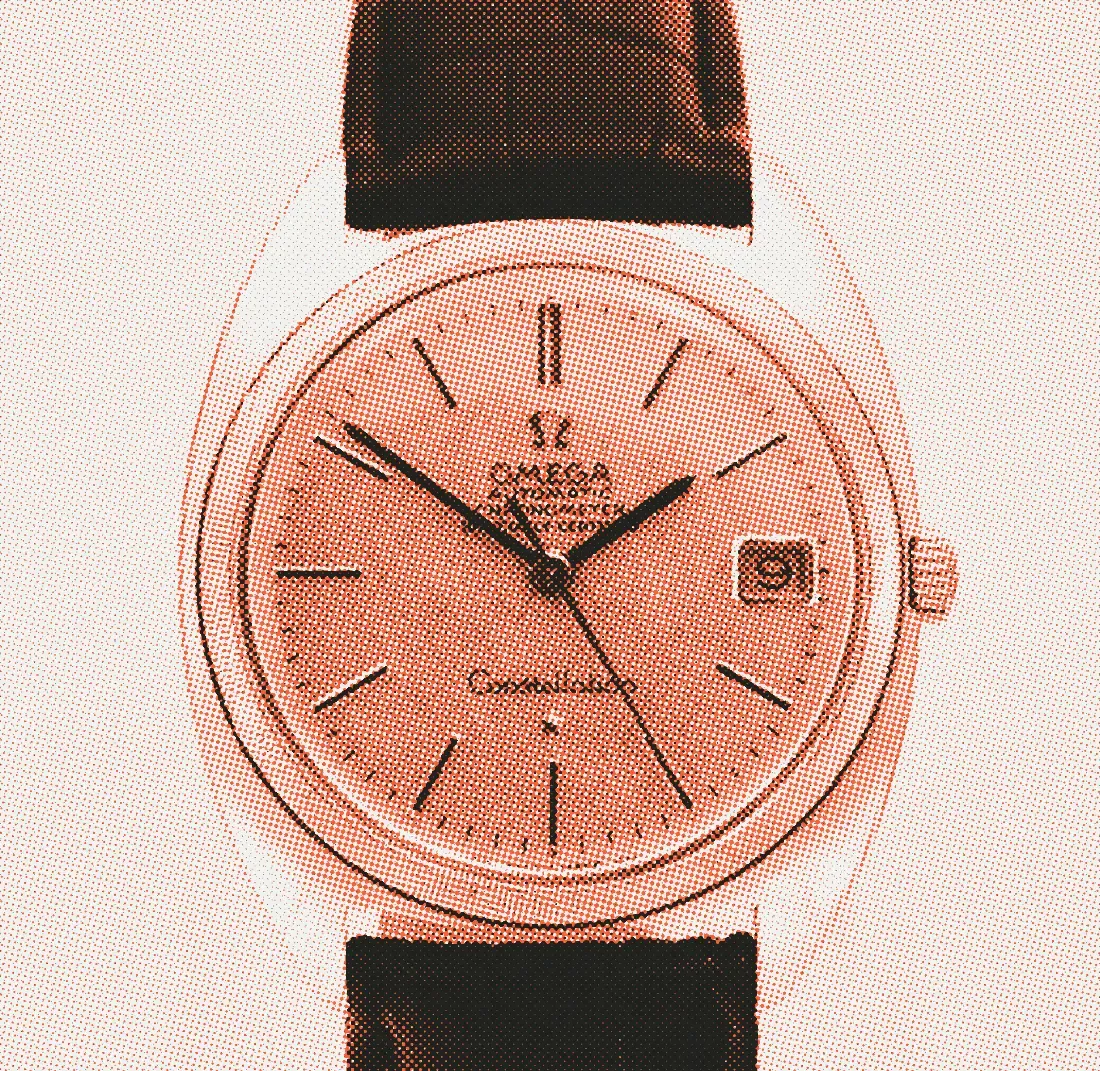
But that is where the comparison ends: where the Omega is as precious as the metal it is carved out of, the Nixon features spartan, industrial lines. Lugs are truncated more so than curved. But that is no crime in my opinion — the Constellation itself featured blocky lugs when seen from the side.
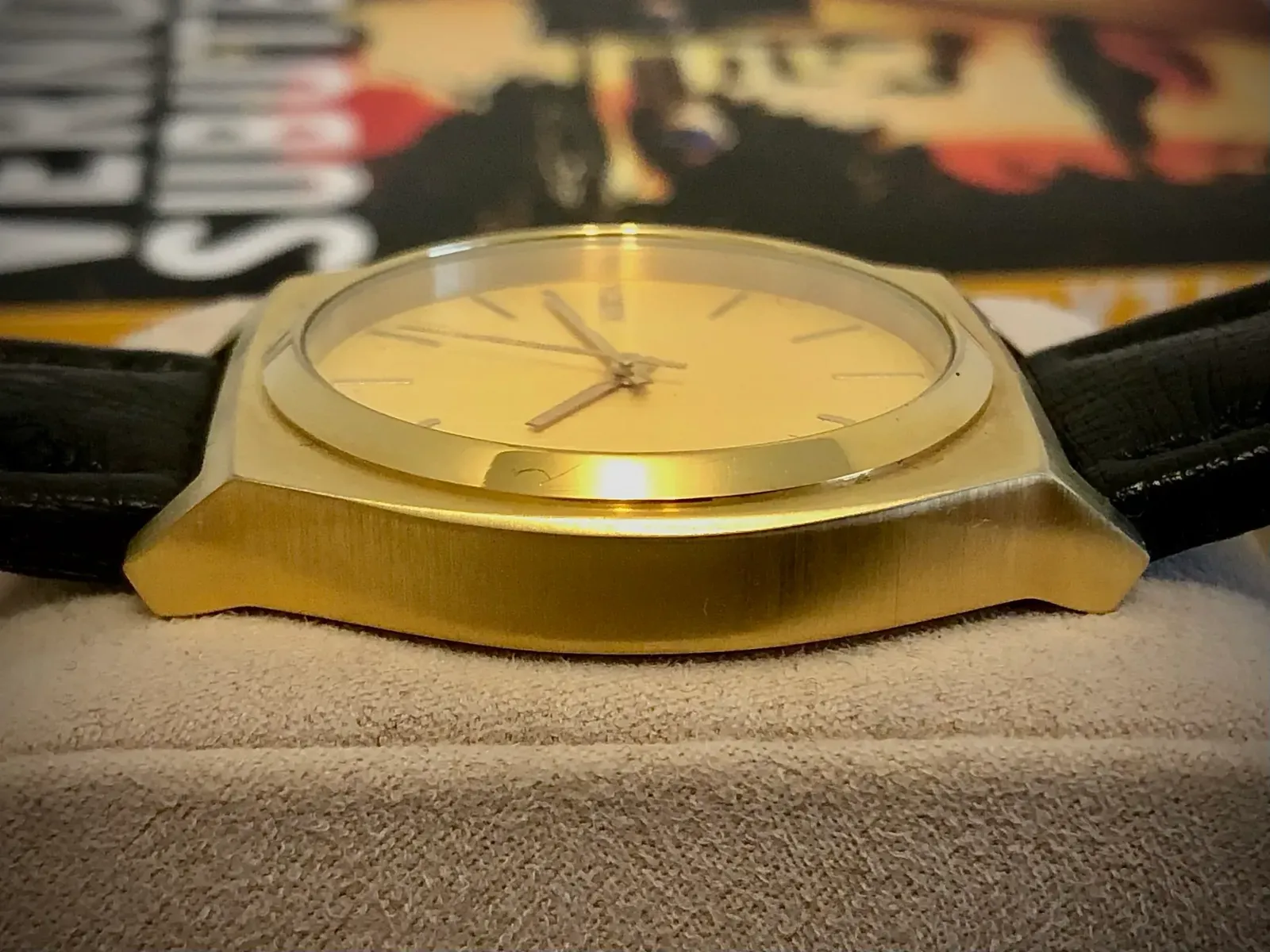
I find other precious little details that lead me to believe that the design received greater care than it gets credit for: the edge of the case is ever-so slightly chamfered, and the watch offers a slim side profile. It features soft circular brushing on the front of the case and lugs, and horizontal brushing on its sides. They complement the nice matte gold tone. It contrasts nicely with the high-polish bezel, which itself is raised from the case and above the mineral glass. The sheen of the bezel is not exactly mirror-polish, so I am glad it only serves as an accent piece.
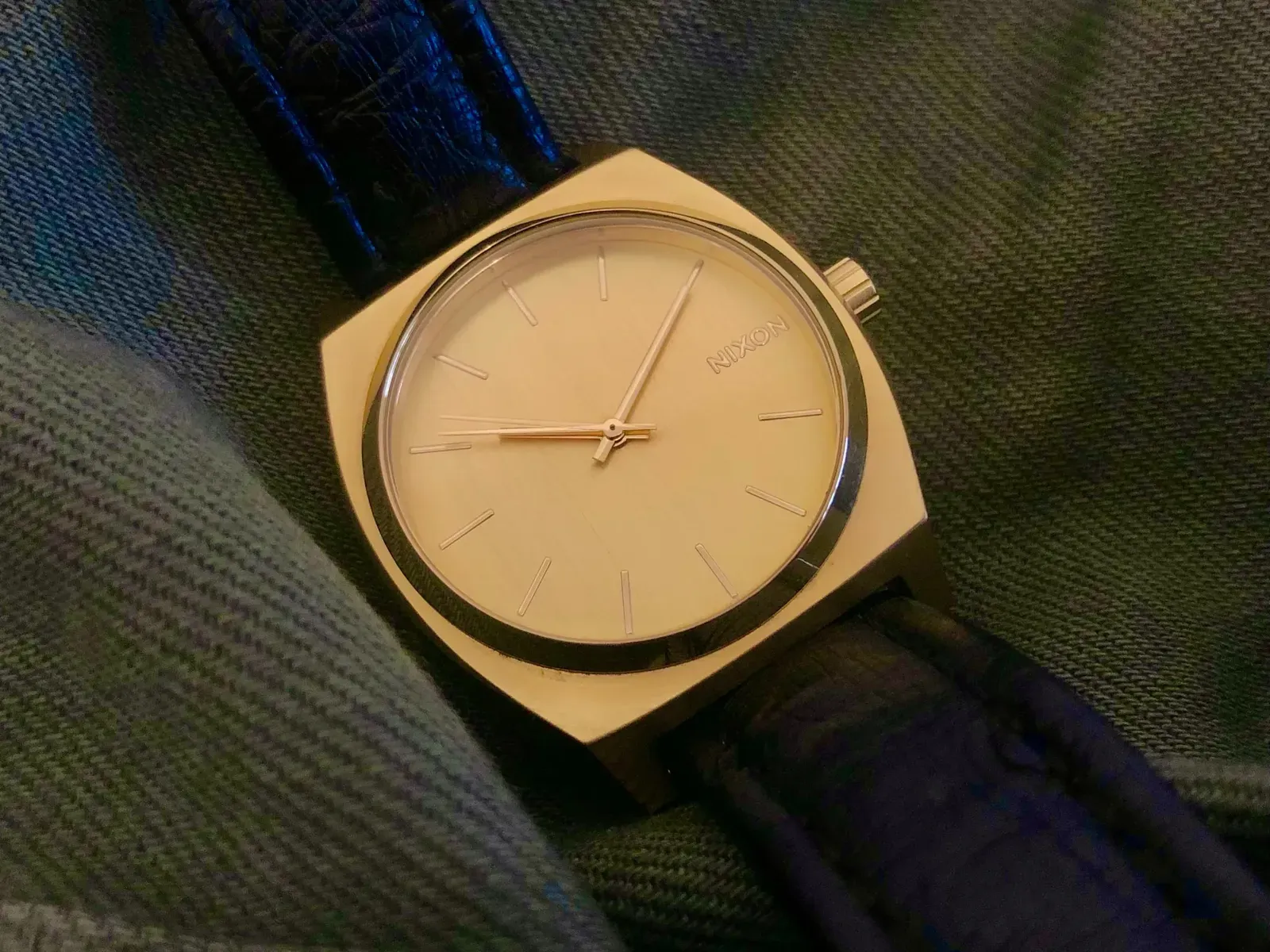
Nixon’s branding at 3 o’clock is the only break in the dial’s design continuum, and a welcome, proportional counterbalance to the visual weight of the crown. It is signed, by the way, and so is the buckle.
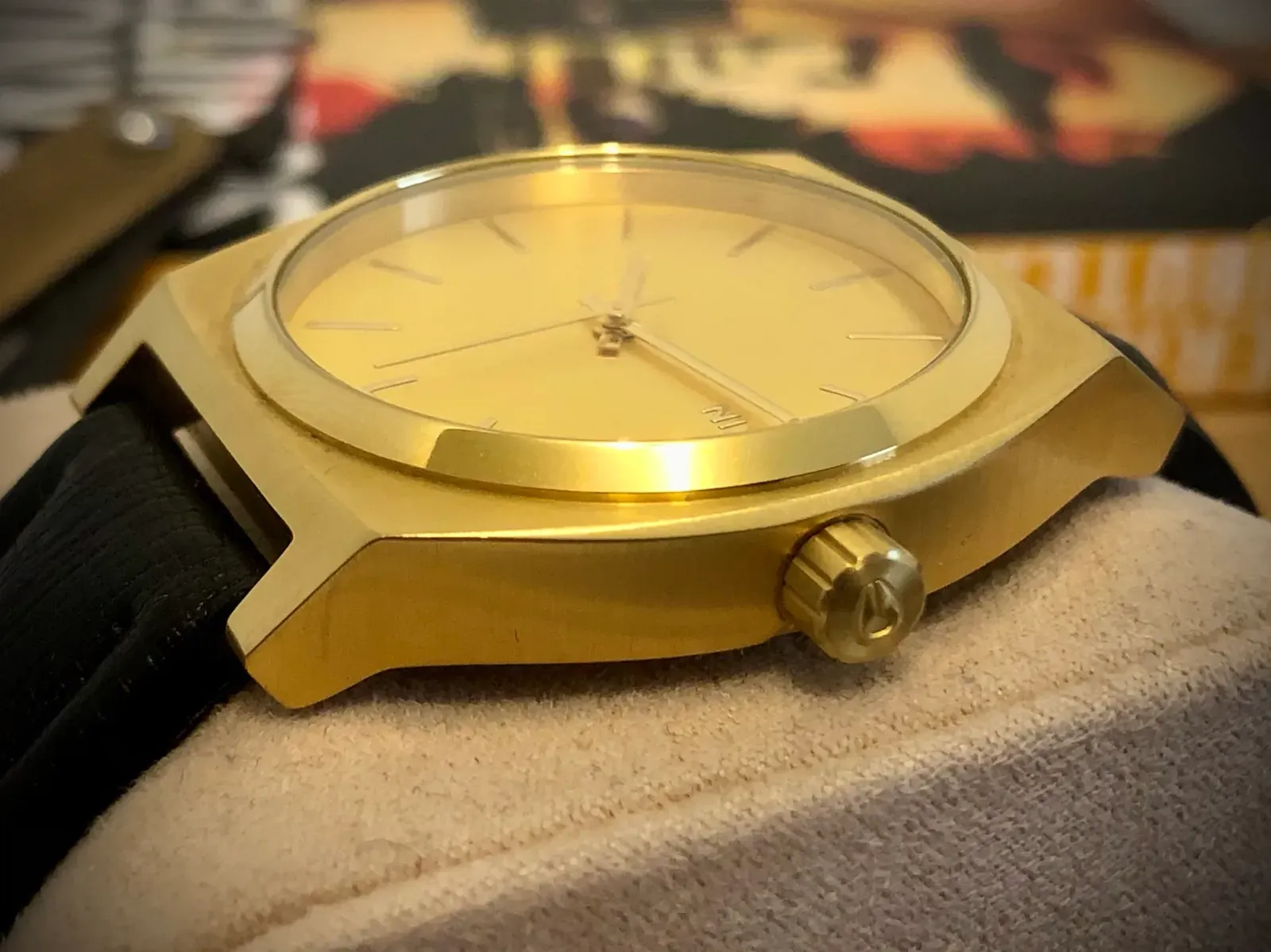
Apple and Oranges
I can picture how economical and artistic considerations had to find a middle ground in order to have this watch produced en masse while still offering a unique look. In an industry of zaratsu polishing and intricately decorated movements, this may seem like a heresy.
But it does not take anything away from the design work that went into this humble piece. It is true the same way the simple lines of a Rolex case make them both iconic and easy for AliExpress brands to copy. If John Mayer is right (he is) and there is indeed a little bit of a 1954 Fender Stratocaster in his vintage Sub, then The Time Teller is a Telecaster. And I love it for that.
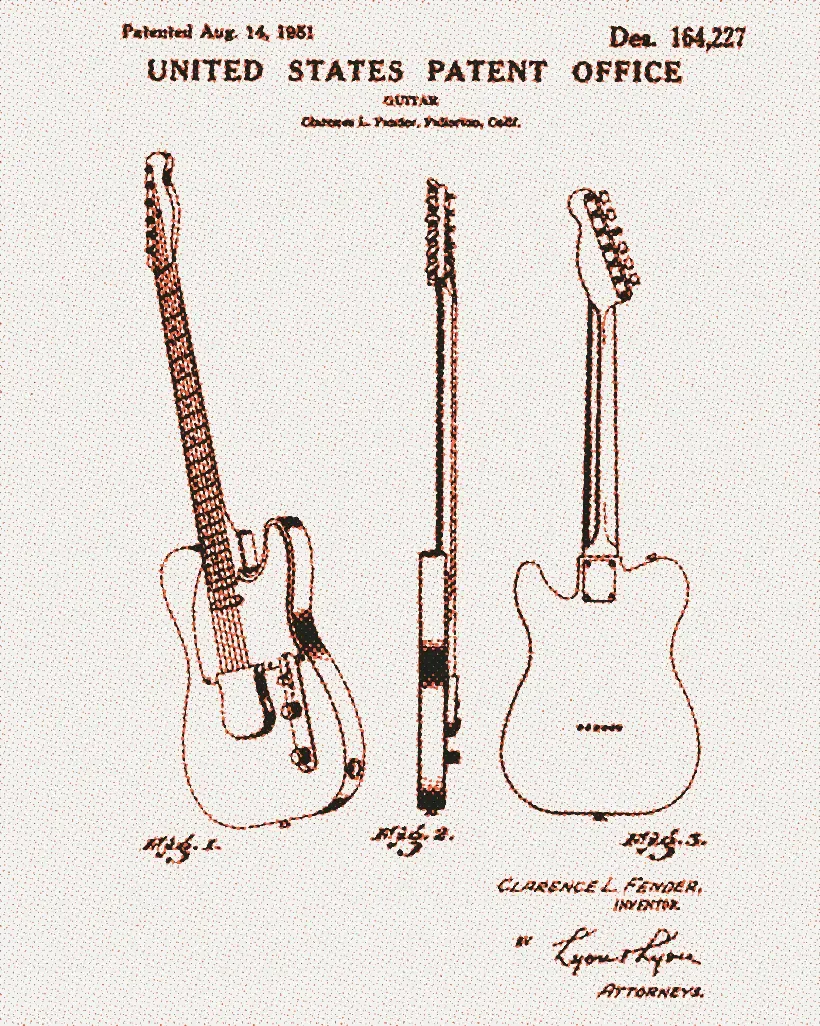
On a side note: if Rolex is Fender — robust, industrial intent in design — then Omega must be Gibson; and Seiko is de facto Ibanez, as the representation of Japan taking both industries by storm in the second half of the 20th century (insert Change my Mind meme).

Last detail worth noticing — Nixon had the exquisite taste of giving The Time Teller 19mm lugs. A most luxurious feature which puts it on par with Rolex, Omega and Grand Seiko — so strap options will be limited.
The Time Teller’s performance: thanks, Captain Obvious
You do not get a screw-down crown but you do get 100 meters of water resistance, which is excellent for most usages.
Inside The Nixon Time Teller is a Japanese quartz movement from Miyota. I could not find the exact reference, but am assuming it to be the 2035. It could seemingly not hit any of the markers if its life depended on it. Luckily, it makes little difference on the otherwise illegible brushed champagne dial with slender high-polish indices. Swiss quartz movements are only found as of roughly double the price point of The Time Teller’s, so it’s fair.
With quartz powering the thing and as suggested by its birth name, the watch does tell the time without you needing to wind or shake it around. I once heard a watch blogger/shop curator state that if you were getting into vintage or mechanical watches for the accuracy, you were in on it for the wrong reasons. As many collectors aspire to possess these pinnacle pieces of old — who would turn down any of JM’s old Rolex chronographs? — the phrase stuck with me.
I have gone sufficiently far down the watch collecting rabbit hole to agree with him, as I imagine many of us do. Even collectors open-minded enough to embrace Grand Seiko’s 9F series of quartz movement — likely on account of their in-house-grown crystals and satisfying two-tick-per-second action. However, is it too bold to ask for an analog watch to tell the time? I do not see why that should be the apanage of an Apple wearable.
Who The Time Teller really is for
I am not conspuing mechanical watches or heritage brands — I love them! — but I like to think that The Time Teller shows that a watch does not need a ton of brand heritage or a mechanical movement to be interesting.
Granted, this is not the watch of the year. It is marketed as a fashion accessory. But brand heritage and mechanical prowess put aside, watches are one of a grand total of only two acceptable forms of men’s jewelry, and most often purchased as such. I think that this particular timekeeper is a true product of design, from a brand that produces watches for a specific purpose, and thus qualifies as a stepping stone or a quirky addition to a pleasant watch collection.
I like to remember Binging with Babish’s Andrew Rea, YouTube’s most infamous aproned torso. His step up from his black Time Teller was his first Rolex, which spawned a beautiful collection full of all-gold wonders and Batpersons.


The Time Teller can be your grab-and-go piece, a beater, a gift for a cool teenager in your life, or to yourself if you’re just trying to find out if you can rock gold jewelry.
Am I a cheapskate?
I haven’t talked about price yet. This watch is easy to find and used to be RRP’d at around EUR 99, with prices now creeping up to EUR 115 – but you can find it easily for around EUR 60 online. I got mine for EUR 24 on sale at an independent action sports retailer!
There is no worrying about servicing a watch like this. More than the cost involved, the availability and skills of a good watchmaker are not required to keep this watch running. You can remove the case back yourself and swap the battery, or have it done for very little money. Indeed, past the short warranty time, collectors are more often left with only the quality of the workforce available where they are located in the world.
This makes me appreciate the no-frills nature of a humble quartz piece. My Seiko Presage never quite ran satisfyingly in spite of two services. At a time when I did not know it was an ideal thing to do, no professional so much as offered me to replace the movement, which would have neither been complicated nor prohibitively expensive. I just flipped the Seiko, The Time Teller stayed.
Closing Thoughts
I’ve read that Cartier, Chopard or Bulgari, who have all produced some of the most era-defining watches of our time, sometimes struggle in retail to be recognized as major watch manufacturers — just because they are also associated with jewelry. In that case, I doubt Nixon will ever really amount to much in our six-beat-per-second, in-house hearts.
After all, their watches are likely cased in large, faceless factories from another millennia, at a time when China is gaining greater watchmaking credibility. We’ve seen all manners of Atelier Wen or AliExpress prodigy San Martin pretending to higher price tags for better manufactured pieces, or taking it to YouTube to show something that’s closer to a workshop than the sweatshops the entire West would have come to expect.
I think I’ve got it: if the Time Teller is designed like a Telecaster, the mother dinosaur of all electric guitars, is Nixon a Fossil — with industrial-commercial practices that belong in amber?